
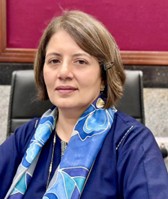
Prof. Dr. Tehreem Fatima
MBBS, M.Phil Anatomy, CMT, MCPS HPE (Enrolled)
Chairperson & HOD Department of Anatomy & Histology
Phone: +92-42-99211145-53 Ext: 191
E-Mail: tehreemfatima4@gmail.com
INTRODUCTION OF DEPARTMENT
The Department of Anatomy at King Edward Medical University stands as one of the oldest and most prestigious pillars of medical education in South Asia. Established in 1860 and housed in the iconic Faridkot Block, it has shaped generations of physicians by laying the scientific foundation of medicine through the study of the human body. Renowned for its rich heritage, spacious dissection hall, advanced histology laboratories, and a dedicated faculty, the department blends classical anatomical teaching with modern scientific inquiry. Its state-of-the-art Anatomy Museum, featuring an exceptional collection of specimens and educational models, offers an inspiring gateway into the world of human structure. The department remains committed to excellence in teaching, training, and scholarly inquiry for both undergraduates and postgraduates.
Many illustrious professors, who have been the architects of King Edward Medical College, Lahore, have led the Department of Anatomy. Among them are Prof. M. A. Siddiqui, Prof. Fakhar-ud-Din, Prof. M. Afzal, Prof. M. Tahir, Prof. T.S. Abidi, Prof. Naseem Feroze, Prof. Attiya Mubarak, Prof. Raafea Tafweez, and Prof. Farhana Sajjad. Today, the department is proudly headed by Prof. Dr. Tehreem Fatima, a renowned medical educationist and an approved FCPS Anatomy Supervisor.
Building on a strong legacy of postgraduate education, the Department of Anatomy offers M.Phil, FCPS, and Ph.D. programs. Following the grant of university status in 2006, the department formally launched the M.Phil program under Prof. Dr. Attiya Mubarak, which has been running successfully ever since. Prof. Dr. Raafea Tafweez pioneered the Ph.D. program in 2010 and FCPS Anatomy in 2014, enabling scholars to undertake innovative research across basic, applied, molecular, and genetic aspects of anatomical sciences. Currently, under the supervision of Prof. Dr. Tehreem Fatima, the department continues to offer the prestigious FCPS Anatomy program with full commitment
GOALS AND OBJECTIVES
Goals:
- To build a solid foundation of human anatomy for students.
- To foster critical thinking and scientific inquiry.
- To promote research, innovation and professional development.
- To make ethical and competent healthcare professionals.
Objectives
- To provide comprehensive knowledge of anatomy to undergraduates and postgraduates.
- To integrate traditional dissection-based learning with modern technologies such as imaging, models, and digital anatomy tools.
- To encourage and supervise research projects in anatomy, including experimental, clinical, and applied studies.
- To organize seminars, workshops, and continuing medical education (CME) programs for students and faculty.
- To collaborate with clinical departments to demonstrate the relevance of anatomy in diagnosis, surgery, and patient care.
- To mentor and support faculty and students in their professional development and scholarly development.
FACULTY
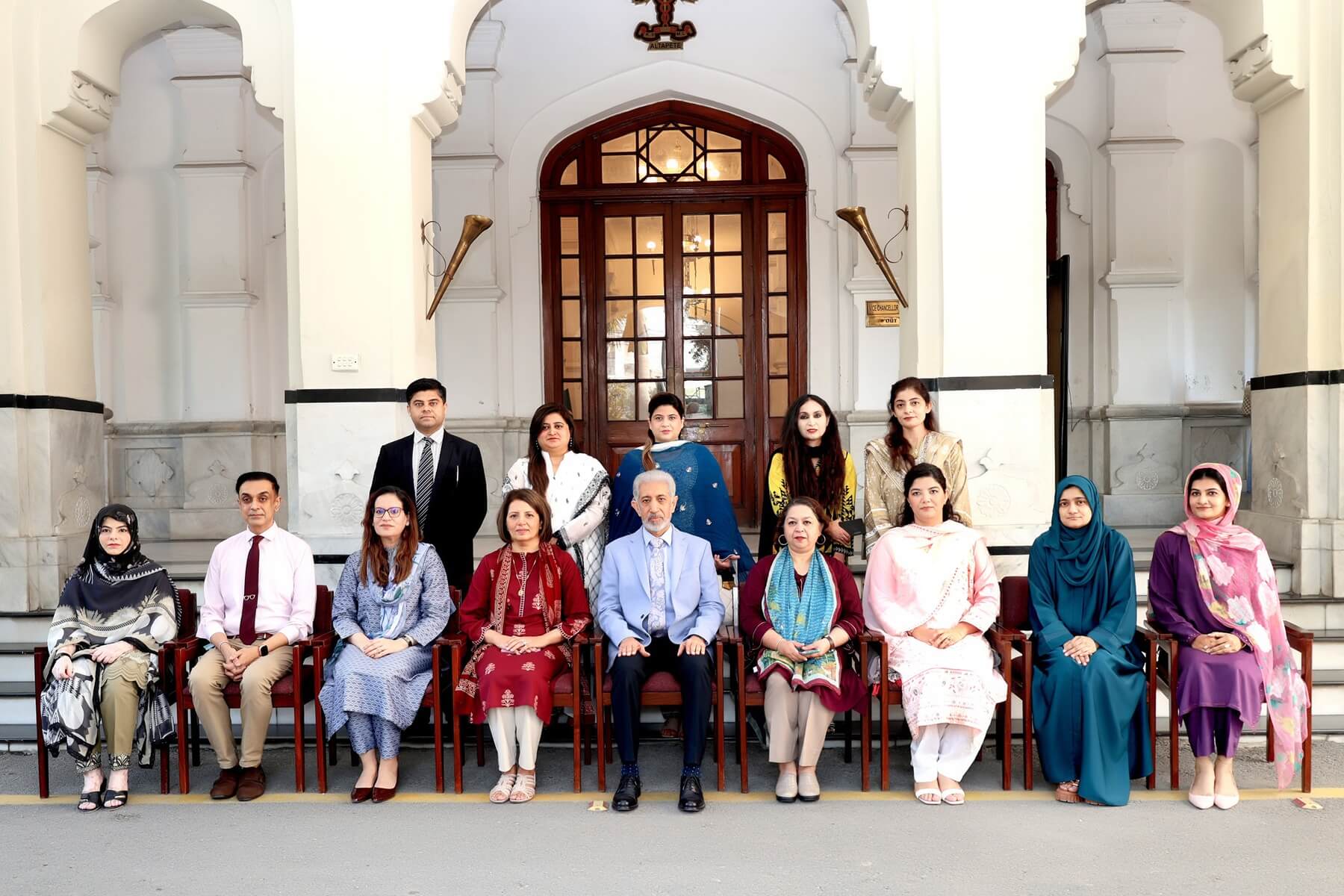
List of Faculty Members | |||
| Name | Designation | Qualification | Contact Information |
| Prof. Dr. Tehreem Fatima | Professor & HOD | MBBS, M.Phil. Anatomy, CMT, MCPS HPE (enrolled) | tehreemfatima4@gmail.com |
| Prof. Dr. Samar Ashraf | Professor | MBBS, M.Phil Anatomy, CMT | samarashraf999@gmail.com |
| Dr. Sarah Khan | Associate Professor | MBBS, M.Phil Anatomy, CMT, PhD scholar | Sarahkhan104@hotmail.com |
| Dr. M. Qasim Muneer | Associate Professor | MBBS, M.Phil Anatomy, CMT. | qasimster@gmail.com |
| Dr. Tooba Inam | Assistant Professor | MBBS, M.Phil Anatomy | toobainam@yahoo.com |
| Dr. Amna Zia | Assistant Professor | MBBS, M.Phil Anatomy, PhD scholar | nicerpeople@gmail.com |
| Dr. Uzma Batool | Assistant Professor | MBBS, M.Phil Anatomy,CMT | usmanghazian@gmail.com |
| Dr. Anum Hafeez | Assistant Professor | MBBS, M.Phil Anatomy,CMT | anum.dogar12@gmail.com |
| Dr. Shumaila Suhail | Assistant Professor | MBBS, M.Phil Anatomy | dr.shumailafaraz@gmail.com |
| Dr. Faiza Hanif | Senior Demonstrator | MBBS, MPhil Anatomy, CMT, CHL&M | Faiza.hanif@yahoo.com |
| Dr. M. Oneeb Saleemi | Demonstrator | MBBS | dr.oneeb@gmail.com |
| Dr. Ayesha Khalid | Demonstrator | MBBS, M.Phil Anatomy | dr.ayeshakhalid04@gmail.com |
| Dr. Sumbal Ashraf | Demonstrator | MBBS | sumbulashraf@hotmail.com |
EDUCATIONAL ACTIVITIES
• MBBS 1st & 2nd year
• Doctor of Physiotherapy 1st & 2nd year
• BSc Vision & Allied Health Sciences
• BSc Nursing
• M.Phil. (Anatomy)
• FCPS (Anatomy)
• Ph.D. (Anatomy)
• Regular Journal Club Meetings for the postgraduates and faculty.
RESEARCH
Published:
• Arshad Jarral S, Fatima T, Mirza TM, Farooq U. Prevalence of anatomical variant renal arterial diameter, early prehilar branching and multiplicity on contrast enhanced computed tomography scans. Annals KEMU [Internet]. 2024 Jun 29 [cited 2025 Aug 6];30(2):163–170. Available from: https://www.annalskemu.org/journal/index.php/annals/article/view/5590
• Shahper L, Bashir Y, Ayyaz HM, Fatima T, Nasreen S. Antioxidant versus endocrine effects of avocado oil in butylparaben-induced ovarian damage of pre-pubertal rats. Pak Postgrad Med J. 2025 Jan–Mar;36(1):42–47.
• Bashir Y, Mahmud T, Fatima T, Ayyaz H. Morphometric variations of jugular foramen in Pakistani population: a comparative analysis with clinical implications. Ann King Edward Med Univ. 2025;31(1):65-70.
• Khan, S., Haider, A., Muneer, M.Q., Zia, A. and Sajjad, F. ANATOMICAL LANDMARKS FOR SAFE SURGICAL PRACTICE: A STUDY OF NUTRIENT FORAMINA OF DRIED CADAVERIC LONG BONES OF UPPER LIMB. JAIMC. 2025;23(3):74-79.
• Sardar M, Ilyas M, Muneer MQ, Akram M, Zeeshan M, Farooqi A, Muneera M. Study of the nutrient foramina of dried long bones of the leg with their clinical implications. J Allama Iqbal Med Coll. 2025;23(1):29–32.
• Yar A, Zia A, Khan MZ, Shahbaz M, Ghani MA, Rashid M. Anatomical variations of the sciatic nerve and their relevance in hip arthroplasty. J Popul Ther Clin Pharmacol. 2025;32(6):1907–1913.
• Rubab SS, Iftikhar W, Atta I, Fatima T, Aslam S, Akram A. Frequency and morphological pattern of Rouvier’s sulcus in human liver. JAIMC. 2024;22(4); 123-126
• Haider A, Khan S, Tafweez R, Yaqoob M. Gender and its association with cardiac defects in Down syndrome population at Children Hospital & Institute of Child Health, Lahore, Pakistan. Pak J Med Sci. 2024;40(3):371–375.
• Malik SH, Sohail S, Awan HA, Tasawar S, Jawad H, Zeeshan S. Histological effects of Citrullus colocynthis seed aqueous extract on thyroid gland of adult albino rats. J Popul Ther Clin Pharmacol. 2024;31(6):3207–3215.
• Salman A, Riaz M, Ilyas M, Ali U, Gulnaz H, Hanif F. Exploring the preferred learning style for gross anatomy among undergraduate medical students in Pakistan: an analysis using the Index of Learning Styles Questionnaire. Ann King Edward Med Univ. 2024;30(4):356–361.
• Hassan S, Sajjad O, Fatima T, Irum B, Mehmood S, Zehra U. Thalassemia patients with polymorphism of COL1A1 Sp1 are at greater risk of spine degenerative changes. J Coll Physicians Surg Pak. 2023 Dec;33(12):1379–1384.
• Haider A, Khan S, Kuraishi RT, Akhtar MS. Cytogenetic study of subtypes of Down syndrome and its relation with pattern of congenital cardiac defects. J Pak Med Assoc. 2023 Feb;73(2):270–274.
• Mansoor S, Suhail M, Suhail AB, Zia A, Afzal A, Shafqat F. Effect of piperine on hypothalamic-pituitary gonadal axis of female albino rats: a randomized controlled study. J Allama Iqbal Med Coll. 2023;21(3):208-212
• Batool U, Qurat ul Ain, William GP, Sohail S, Umer H, Jawad F. Protective effect of pumpkin seed extract on Bisphenol A induced testicular toxicity in adult albino rats. Med Forum Mon. 2023;34(6):10–13.
• Khan S, Haider A, Tafweez R. Karyotypic analysis of children with disorders of sex development (DSD) at Children Hospital & ICH, Lahore. Pak J Med & Health Sci. 2022;16(6):116-117
Completed MPhil Projects: ( 2021 – 2025)
1. Effects of CoQ10 against Vitamin D3 Induced cardiotoxicity in Albino Rats. (Dr. Anum Farooq)
2. Effects of Vitamin E on Alendronate induced gastric ulcer in Albino rats. (Dr. Ayesha Raheem)
3. A comparative analysis of cytogenetic and cytotoxic changes in the oral mucosa of e-cigarette smokers and conventional smokers. (Dr. Ali Qamar)
4. Comparative analysis of salivary chemokine CXCL10 levels and cytotoxic changes in oral mucosa of professional painters. (Dr. Ayesha Rehman)
5. Correlation between salivary fibroblast growth factor 2, risk factors and histopathological grades of oral submucosal fibrosis in patients at mayo hospital Lahore. (Dr. Humaira )
Ongoing MPhil Projects:
1. Association of SHANK3 Gene Polymorphism(rs9616915) with Increased Risk of Parkinson’s disease in Population of Punjab, Pakistan. (Dr. Adeen Ahmad)
2. Effect of Selenium on Perfluorooctanoic Acid induced Thyroid Toxicity in Albino Rats. (Dr. Qirrat Hemeed)
3. Effects of Semaglutide Against Testicular Toxicity Induced By Type 2 Diabetes Mellitus In Adult Male Albino Rats. (Dr. Asma Sadia)
Ongoing PhD Projects:
1. Association of susceptibility loci of various regulatory genes with polycystic ovarian syndrome. (Dr. Sarah Khan)
2. Detection of CNTNAP2 gene polymorphism in Parkinson disease as a predictor of speech disorder. (Dr. Sania Asif)
3. Linking of eNOS, iNOS, RAGE, ARG1 and SELP gene polymorphism and their expression in retinal complications in patients with Type 2 Diabetes Mellitus (Dr. Amna Zia)
PROJECTS / DEPARTMENTAL EXTENSION /SPECIAL FEATURES
Lecture Theater: Capacity increased to 450 students with all modern educational facilities.
Dissection Hall: Roof reconstructed with proper ventilation system, historical floor drawings preserved and restored using modern techniques.
Histology Laboratory: Renovated and fully equipped with modern microscopes, tissue processing and slide-making equipment to support hands-on learning and research for both undergraduate and postgraduates.
Anatomy Museum: Renovated with careful restoration of its traditional architecture, having an extensive collection of anatomical specimens and models.
Departmental Library: The departmental library has been recently renovated with comfortable seating, latest books and journal collections to support learning and research.
Anatomy Learning & Research Center: (A Project of KEMCAANA)
KEMCAANA (King Edward Medical College Alumni Association of North America), particularly the Class of 1980, has actively supported the Department of Anatomy at King Edward Medical University. Their contribution led to the establishment of a well-equipped Learning and Research Centre (LRC) in March 2007. The LRC is furnished with latest computers, multimedia projectors, anatomical models and other modern teaching and learning resources. This contribution greatly enhanced academic activities with innovative teaching, self-directed learning, and research activities. KEMCAANA remains actively involved in the support and maintenance of the LRC till now.
Upcoming Projects:
The department aims to further enrich its learning environment by introducing advanced educational facilities, including:
• Procurement of a state-of-the-art, 3D virtual dissection anatomy table to enhance interactive and spatial learning.
• Installation of smart boards to support dynamic, technology driven teaching and student engagement.