
Prof. Muhammad Faheem Afzal
MBBS (KE), FCPS (Pediatrics), FCPS (Pediatric Infectious Diseases), MHPE (UHS), M.Phil (Public Health)

Chairman, Professor Department of Pediatrics.
Chairman, Program Faulty, Pediatrics.
Professor Department of Pediatrics Unit-I

Program Director, Pediatric Infectious Diseases Fellowship
King Edward Medical University, Lahore
Phone: +92-42-37356987
Email: mfaheem169@yahoo.com

Prof. M Faheem Afzal

INTRODUCTION OF DEPARTMENT

King Edward Medical University houses the country’s premier Pediatric Department. It was established by Late Prof. S.M.K. Wasti in a small room in Outpatient Department of Mayo Hospital, Lahore, in 1948, and was shifted in 1950 to the Tetanus Ward of Mayo Hospital, Lahore. Prof. S.M.K. Wasti assumed charge as its first professor in 1953. In 1956, the department of Pediatrics was shifted to new premises, which was constructed by donation from Rai Bahadur Amarnath in 1946. The department was expanded to a new block in 1982 with increased bed strength of 110. The Children’s Medical Specialty Block, which became operational in 2010, began in 1991, and houses Pediatric emergency, Neonatal Pediatrics, Pediatric Intensive Care Unit and Pediatric specialties. Before 2004, this was single Pediatric Unit. The Pediatric Medicine Unit-II was established in November 2004 to provide better health care to increasing number of patients and to improve the teaching and training of undergraduates and postgraduates. Since 2026, This Department is currently Chaired by Prof. Muhammad Faheem Afzal.

The following professors have served this department as Chairman
Prof. S.M. Hanif1970-1971Prof. Shaukat Raza Khan1971- 1990
Prof. Tariq Iqbal Bhutta1991-1997Prof. Tahir Masood Ahmed1998-2002
Prof. Ghazanfar Ali Sheikh2003-2008Prof. Muhammad Ashraf Sultan2008-2013
Prof. Akmal Laeeq Chishti2013-2017Prof. Muhammad Haroon Hamid2017-2026

GOALS AND OBJECTIVES

Goal:

To impart standardized child health services through excellence in medical education, research, and clinical care.

Objectives:

We achieve our goals through following Objectives

  1. To produce competent medical graduates, postgraduates, and pediatricians through high-quality education and training.
  2. To conduct contemporary research in the field of pediatrics, contributing to advancements in child healthcare.
  3. To deliver evidence-based preventive and curative services for optimal child health outcomes.

Values:

To achieve our objectives, we, at the department of Pediatrics Unit-II, are committed to work on these core values: Quality, Innovation, Team work, Service, Integrity and Compassion.

FACULTY
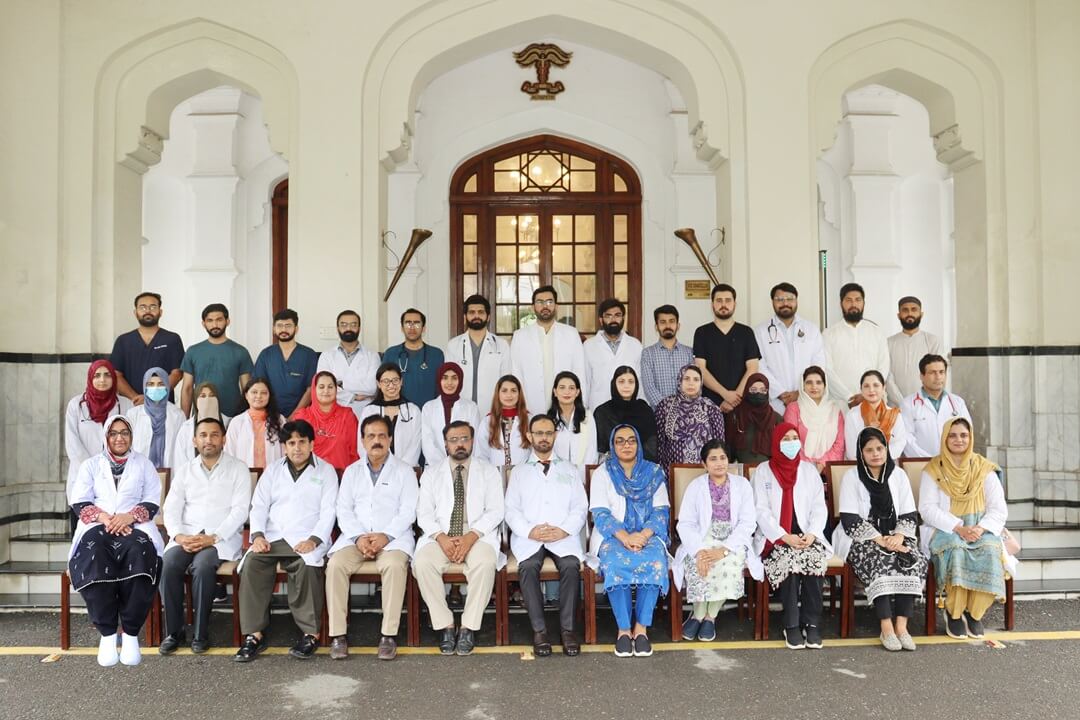
Faculty Group Photo
List of Faculty Members
NameDesignationQualificationContact information
Prof. Muhammad Faheem AfzalChairman/ProfessorMBBS (KE), FCPS (Pediatrics), FCPS (Pediatric Infectious Diseases), MHPE (UHS), M.Phil (Public Health)mfaheem169@yahoo.com
Dr. Sadia ShabbirAssociate ProfessorMBBS, FCPS (Pediatrics), FCPS (Neonatal Pediatrics), CHPEdrsadiashabir@gmail.com
Dr. Muhammad Ahsan BajwaAssistant ProfessorMBBS, FCPS (Pediatrics)dr.ahsanbajwa@kemu.edu.pk
Dr. Qazi Mumtaz AhmadAssistant ProfessorMBBS, FCPS (Pediatrics), CHPEdrmumtazqazi@gmail.com
Dr. Muhammad Kalim AkhterAssistant ProfessorMBBS, FCPS (Pediatrics), CMT (KE)akhtarkalim231@gmail.com
Dr. Navaira ArshadAssistant ProfessorMBBS, FCPS (Pediatrics), MRCPCH, CHPEnavairaarshad@gmail.com
Dr. Efra AbbasAssistant ProfessorMBBS, FCPS (Pediatrics), MRCPCH, CHPEdrefraabbas@kemu.edu.pk

EDUCATIONAL ACTIVITIES

POST-GRADUATE TEACHING PROGRAMS

Level IV

Neonatal Pediatrics (FCPS & MD)
Pediatric Infectious Diseases (FCPS & MD)
Pediatric Endocrinology & Diabetes (FCPS & MD)
Pediatric Intensive Care (FCPS & MD)

Level III

FCPS-Pediatrics
MD-Pediatrics

Level II

DCH-Pediatrics

UNDERGRADUATE PROGRAMS

MBBS – Pediatrics
Pediatric Nursing

EDUCATIONAL ACTIVITIES

  • Mortality meetings
  • Case-based teaching
  • Journal club
  • Basic Procedural skills workshops
  • Faculty development workshops.
  • Foreign Faculty Lectures
  • Faculty & Residents’ participation in National & International Pediatric Conferences & Symposia.

RESEARCH

RESEARCH (PAST FIVE YEARS)

PUBLICATIONS

  • Characteristics of Dengue Hemorrhagic Fever in Children in 2011 & 2013 Outbreaks A Comparison (Pak Pediatr J 2018; 42(2))
  • Spectrum of Joint deformities in children with Juvenile Idiopathic Arthritis (J Coll Physicians Surg Pak 2018; 28(6):470-73).
  • Basics of Mechanical Ventilation-A review (Pak Pediatr J 2018; 42(1): 3-15).
  • Loss-of-function mutations in ADCY3 cause monogenic severe obesity (Nature Genetics 2018; 50:175-9)
  • Role of melatonin in management of hypoxic ischemic encephalopathy in newborns: A randomized control trial (J Pak Med Assoc 2018; accepted for publication)
  • Latent tuberculosis infection (LTBI) in children less than 12 years of age in a tertiary care centre, Lahore, Pakistan (Pak Pediatr J 2017; 41(4): 208-11)
  • OptiCard: An inexpensive and portable method of bedside direct fundoscopy (J Coll Physicians Surg Pak 2017;27:719-21.
  • Frequency of benign blood disorders in children. A bone marrow based analysis at a tertiary care hospital (Pak J Med Health Sci 2017; 11(3): 898-901)
  • Spectrum of Pancytopenia in Children Based upon Bone Marrow Study (Pak J Med Health Sci 2017; 11(2):661-3)
  • Hematological Diagnosis in Children: Results of a 10 year Bone Marrow Examination (Pak J Med Health Sci 2017; 11(2): 664-6)
  • Immune memory and anamnestic immune response in children, 1-10 years after primary hepatitis B vaccination (J Ayub Med Coll Abbottabad 2016; 28(4):715-7)
  • Knowledge and perception of hand hygiene among house officers in a tertiary health care centre in Punjab, Pakistan (Ann King Edward Med University 2016; 22(3):185-90)
  • The validity of hematologic markers for diagnosis of neonatal sepsis (Ann King Edward Med Uni 2015;21(4):240-6)
  • Genetic variants in LEP, LEPR, and MC4R explain 30% of severe obesity in children from a consanguineous population (Obesity 2015; 23: 16871695)
  • Chikungunya fever among children presenting with nonspecific febrile illness during an epidemic of dengue fever in Lahore, Pakistan (Merit Research
  • Journal of Medicine & Medical Sciences 2015; 3(3):69-73)
  • Effect of formulated Gluten free flour on the nutritional status of celiac patients (J Nutr Ecol Food Res 2014;2(1): 54-63)
  • Vaccine-induced anti-HBsAb level in 1-5 years-old malnourished children (Infect Dis J 2014; 23(1): 654-6)
  • Experience of Malaria in children; A field hospital study (East Mediterr Health J 2013; 19(7):613-6)

PROJECTS / DEPARTMENTAL EXTENSION /SPECIAL FEATURES

PROJECTS COMPLETED

  1. Effect of intermittent Kangroo Mother care in improving vital physiological parameters of preterm newborn
  2. Etiology of Congenital Hypothyroidism
  3. Iatrogenic or Medical Error; Make not two sorrows of one
  4. Comparison of salbutamol delivered by a metered dose inhaler with spacer versus nebulizer in asthmatic children presenting in Pediatric emergency section
  5. Comparison of effectiveness of nebulization with 3% hypertonic saline vs. 0.9% saline among the children presenting in emergency with moderate to severe acute bronchiolitis
  6. Comparison of mean duration of Rota Virus diarrhea after administration of zinc sulphate versus control
  7. Frequency of neonates on exclusive breast feeding and comparison of the growth in terms of gain in length and weight of breast fed compared to formula fed infants
  8. Etiology of Congenital Hypothyroidism, target height calculation in Lahore: Are we doing it right, Ovarian and Uterus volume from birth to puberty: A local norm leptin deficiency in severe obese children.
  9. Mean duration of Rota Virus diarrhea in children after admission of first dose of nitazoxanide
  10. Comparison of Growth Parameters of Preterm Neonates with and without Zinc Supplementation
  11. Comparison of oral versus intramuscular cobalamin for treatment of nutritional megaloblastic anemia
  12. Comparison of safety of desferrioxamine with oral chelating agent deferasirox in Beta thalassemia major patients.
  13. Frequency of complete EPI vaccination in patients coming to tertiary care OPD
  14. Diagnostic Accuracy of modified TAL’s score in assessment of Hypoxemia in infants with Acute Bronchitis
  15. Role of 4% Chlorhexidine in reducing the incidence of omphalitis and neonatal mortality when used on the umbilical cord of the newborn
  16. Specificity and sensitivity of USG in diagnosis of pneumonia in children
  17. Comparison of emollient therapy vs standard care in preterm and low birth weight neonates presenting in a tertiary care hospita
  18. Role of home make CPAP in management of respiratory distress in neonates
  19. Mean Time to Return to Normal Stool with Probiotic Lactobacillus GG versus Placebo during management of children presenting with Acute Watery Diarrhea
  20. Accuracy of the CRIB II for the prognosis of severely ill preterm neonates
  21. Frequency of UTI in children presenting with fever without fever under 5 years age
  22. Risk factors associated with morbidity in pattern of Acute Bacterial Meningitis
  23. Role of probiotics in prevention of neonatal necrotizing enterocolitis (NEC) in premature infants
  24. Dexamethasone in the treatment of neonatal meningitis: a randomized controlled trial
  25. Comparison of efficacy of daily versus intermittent iron therapy in children with iron deficiency anemia
  26. Mean duration of Rota virus diarrhea in children after admission of first dose of Nitazoxanide

ONGOING PROJECTS

  1. WHO surveillance projects for sepsis, bacterial meningitis, pneumonia and rotavirus
  2. Pakistan Rotavirus Network (PARVAN): Post- vaccination impact of Rotavirus in collaboration with Aga Khan University Karachi, WHO & Bill Melinda Gates Foundation
  3. Retinopathy of prematurity- in collaboration with College of Ophthalmology & Allied vision sciences (COAVS)
  4. Tolerability of dispersible zinc tablets in children with acute diarrhea
  5. Lactose-free formula vs Lactase enzyme in post-diarrheal lactose intolerance
  6. Quality of life among Pediatric patients suffering from Acute Lymphoblastic Leukemia
  7. Validity of PIM 2 score as an outcome predictor in PICU
  8. Comparison of serum bilirubin measurements by venous capillary and transcutaneous methods in neonates
  9. Comparison of outcome of hypoxic ischemic encephalopathic newborn with and without erythropoietin therapy
  10. Comparison of the efficacy of levetiracetam with phenytoin for the management of children with status epilepticus
  11. Comparison of efficacy of nebulized with intravenous magnesium sulphate in children with acute asthma
  12. Association of vitamin D supplementation with outcome of critically ill children
  13. Factors associated with Cerebral Edema among children with Diabetic Ketoacidosis
  14. ECG pattern in Anti-tissue Transglutaminase Antibodies positive Celiac Disease; can we use as a diagnostic Tool.
  15. Assessment of quality of life in 8 to 12 years old children with beta thalassemia major
  16. Comparison of continuous and intermittent phototherapy in exaggerated physiological hyperbilirubinenemia in newborn more than 34 weeks gestational age
  17. Oxygen saturation index and severity of hypoxemic respiratory failure in children
  18. Association of mortality with hyperglycemia in critically ill children presenting in intensive care unit
  19. Association of Rota virus immunization with frequency of acute diarrheal hospitalization in infants
  20. Frequency of anaemia in children with community acquired pneumonia presenting in tertiary care hospital of Punjab
  21. Comparison of outcome of oral and intravenous antibiotics for management of children with pneumonia
  22. The measurement and making of stretched penile length (spl) chart of punjabi newborn
  23. Study on microbial colonization of intravascular catheters inserted in neonates admitted in NICU
  24. Comparison of efficacy of nebulised epinephrine versus salbutamol in acute bronchiolitis
  25. Comparison of insulin glargine mixed with regular insulin versus the standard neutral protamine hagedorn (NPH) and regular insulin in the treatment of type I diabetes mellitus
  26. Diagnostic accuracy of bacterial meningitis score in confirmed cases of acute pneumococcal meningitis in children 2 months-12 years
  27. CSF lactate as a diagnostic biomarker of bacterial meningitis in children Correlation of Mean Platelet Volume and severity of acute gastroenteritis
  28. Frequency of Giardiasis in acute diarrhea in children
  29. Outcome comparison of rice based ORS vs hypo-osmolar ORS in acute watery diarrhea
  30. Diagnostic accuracy of leukocyte esterase in confirmed cases of urinary tract infection in children
  31. Diagnostic accuracy of absolute leukocyte count in infants younger than 90 days of age with fever without focus
  32. Diagnostic accuracy of lung ultrasound in diagnosis of pneumonia in children
  33. Comparative accuracy of serum bilirubin measurement in neonates by venous capillary and transcutaneous methods in neonates
  34. Comparison of duration of hospitalization with continuous and intermittent pulse oximetry in patients presenting with acute bronchiolitis
  35. Comparative efficacy of apple juice and hypo-osmolar ORS in acute watery diarrhea with no dehydration
  36. Diagnostic accuracy of urinary dipstick for detection of bacterial meningitis
  37. Diagnostic accuracy of modified Centor score in confirmed cases of group A streptococcal acute pharyngitis in children of age 3-12 years
  38. Comparison of risk factors for Methicillin Resistant Staphylococcus aureus (MRSA) colonization in healthy newborns, born to mothers with and without MRSA colonization
  39. Diagnostic accuracy of pulse oximetry for prediction of spo2 in children with pneumonia taking arterial blood gases as gold standard
  40. Frequency of anemia in children with pneumonia
  41. Pulse oximetry in bronchiolitis continuous vs intermittent
  42. Comparison of bubble CPAP and control (nasal oxygen cannula) in reduction of respiratory distress in neonates
  43. Association of Iron Deficiency Anemia with Febrile Seizures in children Less than 5 years of age
  44. Prevalence and risk factors of neonatal candidemia
  45. Comparison between single dose oral dexamethasone versus oral prednisolone therapy in acute pediatric asthma
  46. Efficacy of 0.9% saline versus 0.45% saline in 5% dextrose water as a maintenance fluid therapy in children with acute central nervous system infections
  47. CMV sero-positivity in multi-transfused children
  48. Low maternal measles immunity; A risk factor for measles in infants under 9 months of age
  49. bCPAP vs oxygen therapy in neonatal respiratory distress

HEALTH SERVICES / STATE OF ART FACILITIES

The Pediatric Specialty Block has five floors. The Ground floor of the department houses the Pediatric Emergency. The 1st floor of the block houses the Neonatology, Pediatric Intensive care, Pediatric Nephrology & Diarrhea section. On the 2nd floor there are General Medical Section & Pediatric Haemodialysis facility. The 3rd floor has Pediatric & Neonatal Intensive Care Units, High dependency Unit, & Unit for Emerging Pediatric Diseases. The 4th floor has been dedicated to Sub-specialties of Pediatric Infectious Diseases, Pediatric Endocrinology & Diabetes, Pediatric Hematology/Oncology & Pediatric Neurology alongside EMG and EEG rooms. The 5th floor houses the offices, audiovisual room, class room, conference room, computer lab, library, PCR Laboratory and Research Office. Pediatric Pathology, Pediatric Radiology & Preventive Pediatric Services are under the supervision of Chairman Department of Pediatrics. Pediatric Radiology provides routine X-Rays, ultrasound, Color Doppler ultrasound and portable Radiography services in critical areas. Basement of Pediatric specialty block hosts Department of Social & Preventive Pediatrics, which provide vaccination, nutrition & preventive services. Follow up clinics for Pediatrics Unit-I are placed in basement. Affiliated hospitals with Pediatrics Unit-I include Govt. Mian Munshi Hospital, Lahore and Govt. Said Mitha Hospital, Lahore.