
Introduction
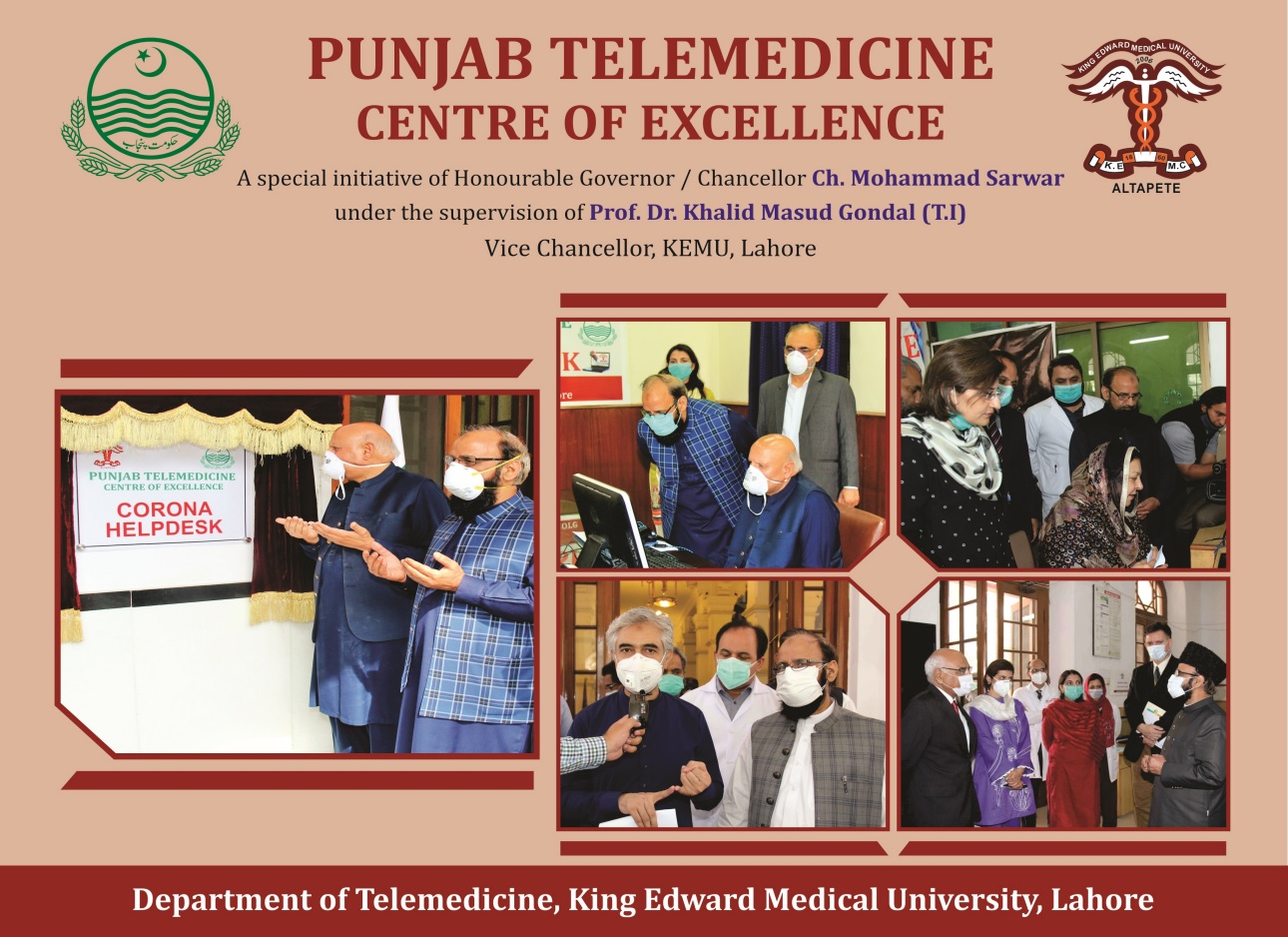
To provide timely and continues support and facilitate the outdoor patients amid the pandemic caused by COVID-19 CORONA VIRUS, The Vice Chancellor KEMU as per instructions of Honorable Governor Punjab and Minister for Health, has taken the initiative to establish a TeleMedicine Department at King Edward Medical University, Lahore. Where dedicated staff including specialized doctors, IT Personnel and support staff will be available, for the assistance of patients via internet using Skype, WhatsApp and Landline.
Telemedicine Book
Telemedicine Android App

Telemedicine Android App
AI FOR HEALTH LAB
Bundling medical AI and healthcare expertise to save lives
WHAT IS AI FOR HEALTH LAB?
Empowering Medical Professionals and Patients with AI
With the AI for Health Lab we pool resources and share knowledge for the advancement of public health. Working with sensitive patient data is a tricky exercise and so is using AI to do critical diagnosis decisions. Through this Lab we are able to organize more AI for Good Challenges; deliver more real life healthcare solutions to medical centers; and train our machine learning community in specific skills relevant to medical AI.
Make life-saving data available while preserving privacy
WHAT AI TECH DO WE FOCUS ON?
Medical Imaging
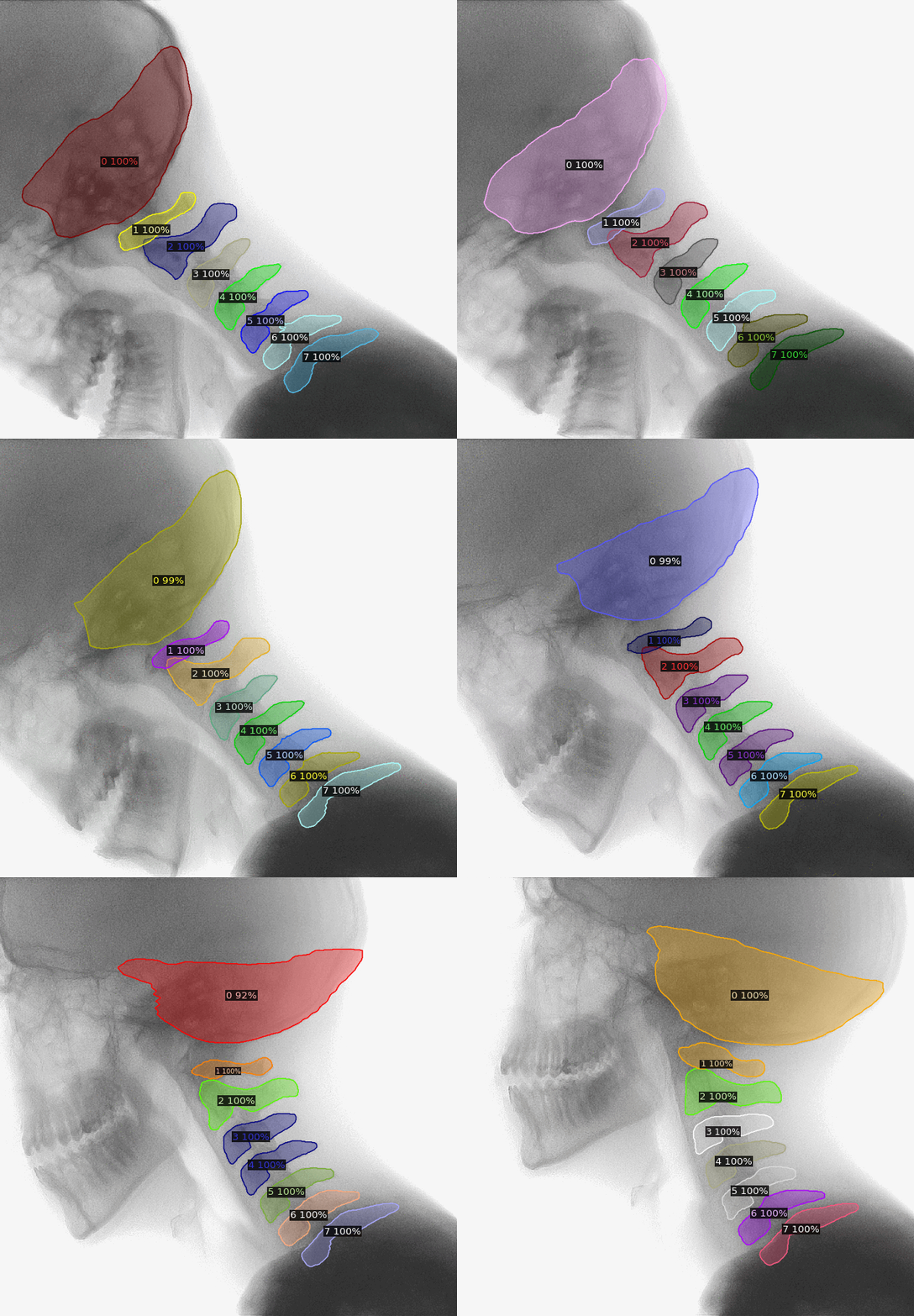
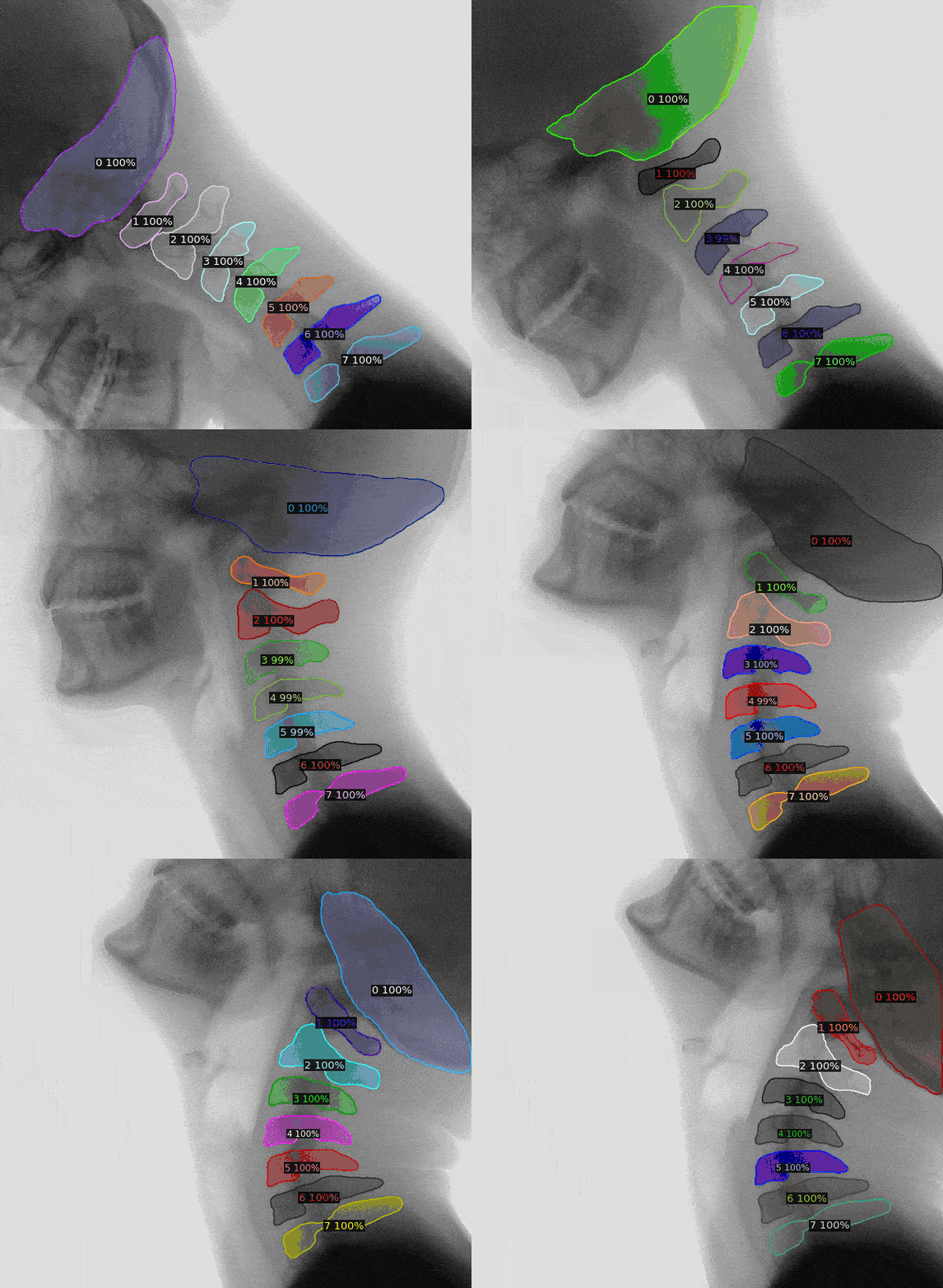
The use of artificial intelligence in diagnostic medical imaging has shown impressive accuracy and sensitivity in the identification of imaging abnormalities. Assisting healthcare professionals with detection, segmentation and classification, it can be of immense value for screenings and precision medicine. Our AI for Health engineers used Generative Adversarial Networks to segment X-rays of lungs to detect Covid-19. They applied U-nets and mask-RCNN for instance segmentation of cervical vertebrae to predict patient developing hernia.
Sensitive Patient Data
Medical AI is teeming with sensitive patient data used to train machine learning models. We teach our AI engineers how to handle sensitive information without compromising the model accuracy. We deploy techniques like Federated Learning to train algorithms across multiple decentralized servers holding local data without sharing them.
Explainable AI
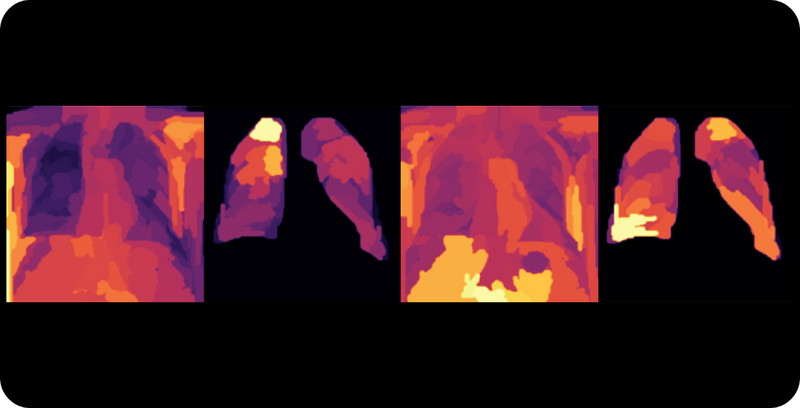
For transparent algorithmic decision making we deploy the techniques of Explainable AI or sometimes called Trustworthy AI. In healthcare, it’s important to see how the machine learning model arrived at a certain decision. How does it assess which preterm baby is at risk of getting sepsis or what does the neural network pay attention to when segmenting a medical image (as seen on our heatmap of a lung scan)?
Biosensor Analysis
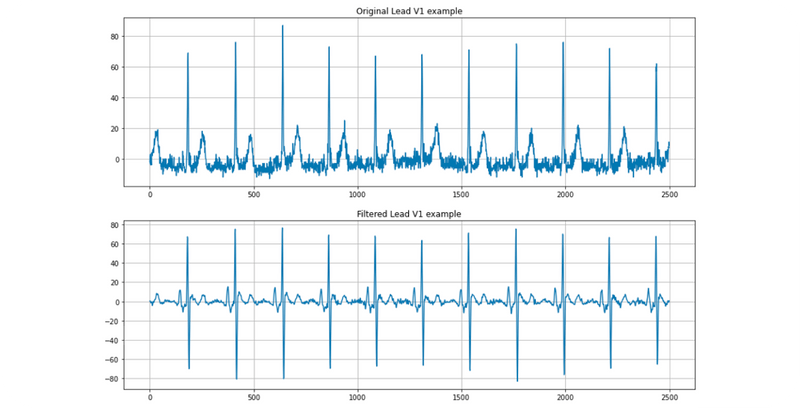
We collaborate with medical professionals to deploy state-of-the-art medical analysis in our Challenges. In order to develop a usable AI solution, the participants need to understand the relevant hardware and the medical procedures. To improve hernia detection models for example, it’s of great value to have a neuroscientist explain the principles of radiology imaging, hernia diagnosis and its treatment to Challenge participants. Or the analysis of electrocardiograms to prevent heart failure.