
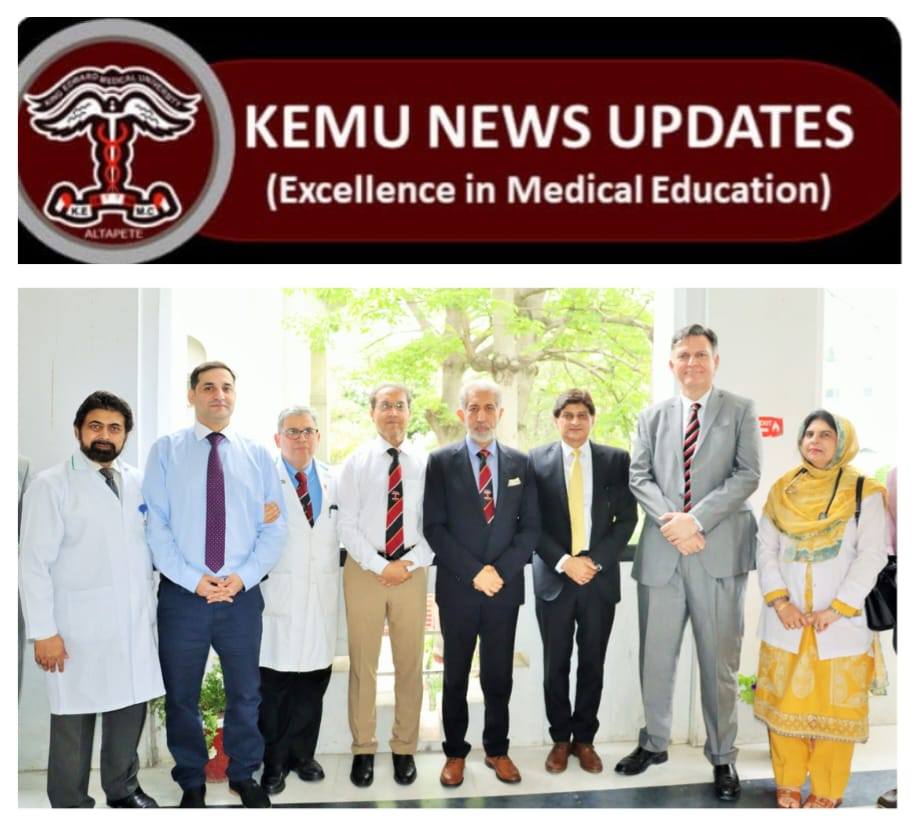
Advancing Innovation in Cardiac Surgery: International-Standard Hands-on Workshop Held at King Edward Medical University
King Edward Medical University (KEMU), through its Department of Cardiac Surgery, successfully organized a high-impact CME-accredited hands-on training workshop and seminar titled “Hypothermic Strategies and Organ Protection in Cardiac Surgery” on April 7, 2026.
This specialized academic activity focused on critical aspects of modern cardiac surgery, including effective temperature management, regulation during cardiopulmonary bypass, and advanced organ protection strategies. The workshop was designed to enhance both theoretical understanding and practical competencies of participants, aligning their skills with contemporary international standards.
The seminar served as a dynamic platform for cardiac surgeons, residents, cardiac anesthesiologists, clinical perfusionists, and critical care physicians. Participants benefited from direct interaction with experienced experts and gained hands-on exposure to cutting-edge techniques in the field.
The event was graced by the Vice Chancellor of King Edward Medical University, Prof. Dr. Mahmood Ayyaz, as the Chief Guest, while Prof. Dr. Syed Asghar Ali Naqvi attended as the Guest of Honour. The workshop was led and organized under the supervision of Dr. Atta Ullah Khan Niazi, Head of the Department of Cardiac Surgery.
Key contributors to the successful execution included Dr. Nimra Aziz, Dr. Amna Abbas, Dr. Asma Sharif, Dr. Muhammad Mohsin, Dr. Amna Batool Jaffri, and Mr. Hafiz Raheel Javed, along with other distinguished faculty and clinical staff.
The seminar witnessed participation from leading professionals across various institutions, including Prof. Shoaib Nabi Buzdar, Prof. Abrar Ashraf Ali, Prof. Muhammad Imran, Prof. Dr. Irfan Azmatullah Khawaja, Dr. Zameer ul Asar, Mr. Zahid Ali Jaffri, Mr. Mirza Azhar Iqbal, Ms. Iqra Azhar, and Dr. Adnan Haider.
In his address, Vice Chancellor Prof. Dr. Mahmood Ayyaz highlighted the evolving role of hypothermia in cardiac surgery. He explained that while hypothermia is generally avoided in trauma care due to risks, in cardiac surgery it is deliberately used during cardiopulmonary bypass to reduce metabolic demand and improve patient outcomes. He emphasized its importance in minimizing metabolic stress and modulating inflammatory responses, contributing to safer surgical interventions.
Prof. Dr. Syed Asghar Ali Naqvi noted that precise temperature control and organ protection are essential for successful cardiac surgical outcomes, adding that the workshop effectively strengthened participants’ clinical and technical skills.
Dr. Atta Ullah Khan Niazi reiterated that the workshop aimed to provide both advanced academic insight and hands-on training opportunities, marking a significant step toward improving the quality of cardiac care.
At the conclusion, Dr. Atta Ullah Khan Niazi presented the vote of thanks, acknowledging the efforts of all contributors. Vice Chancellor Prof. Dr. Mahmood Ayyaz distributed honorary shields among participants in recognition of their engagement and commitment.