Cardiac Advanced Life Support (CALS) Workshop Held at King Edward Medical University
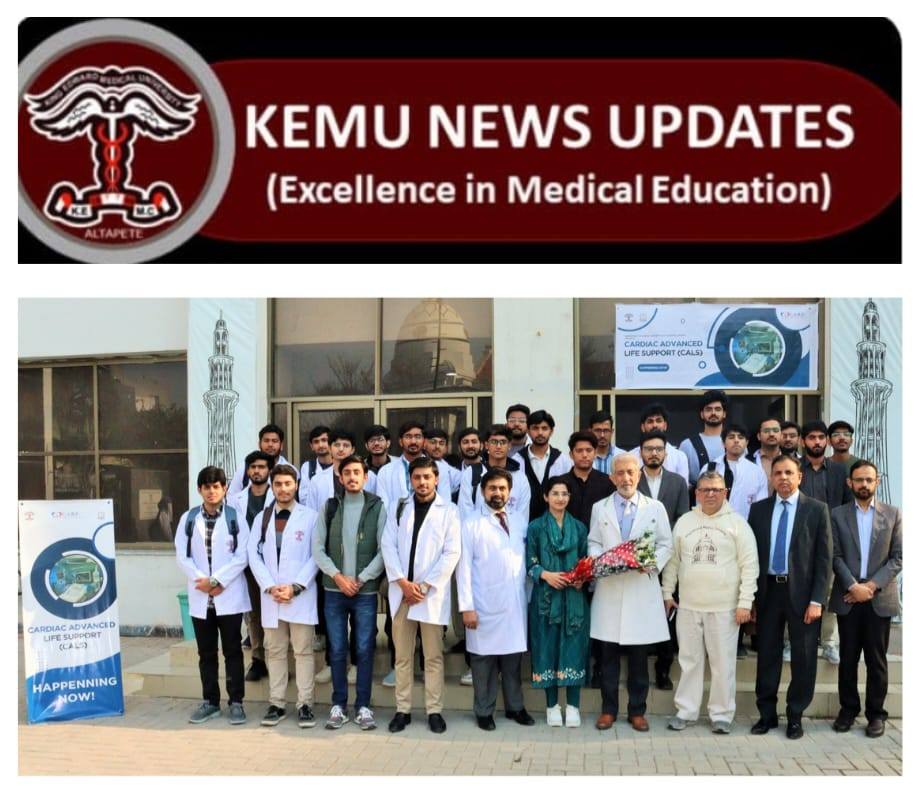
A comprehensive and hands-on workshop on Cardiac Advanced Life Support (CALS) was organized by the Department of Cardiac Surgery at King Edward Medical University (KEMU). The primary objective of this training session was to strengthen the capacity of trainees, students, and healthcare staff to provide prompt and effective medical response in emergency situations. Through modern teaching methodologies, simulation-based learning, and practical demonstrations, participants were equipped with updated clinical skills and contemporary medical practices.
This workshop marked the successful conduct of the first CALS course in Pakistan in collaboration with CARE UK, representing a significant milestone and the beginning of a new chapter in cardiac surgery training at Mayo Hospital, Lahore. The organizers acknowledged the valuable facilitation and support of Prof. Dr. Abrar Ashraf Ali, Prof. Dr. Asghar Naqi, and Prof. Dr. Ahmad Uzair Qureshi in making the program a success.
The workshop was held under the patronage of Patron-in-Chief Vice Chancellor Prof. Dr. Mahmood Ayyaz, who delivered a detailed and insightful scientific address to the participants. He presented an overview of cardiac arrest, the complex biological and molecular mechanisms of respiration, and the physiological journey of oxygen within the human body. He explained that respiration is an integrated biochemical and molecular process in which oxygen enters through the nasal passages, reaches the lungs, becomes part of the bloodstream, and supplies energy to vital organs including the brain.
The Vice Chancellor emphasized that the timely delivery of oxygen to the brain is critical for sustaining life, as the first four minutes following respiratory compromise are extremely decisive, with a high risk of irreversible brain injury. He highlighted that timely CPR, effective airway management, and advanced life support techniques play a fundamental role in saving lives, and that structured CALS training programs empower clinicians to make rapid, evidence-based decisions during emergencies.
The workshop was supervised by Prof. Irfan Azmatullah Khwaja, who delivered an academic lecture on cardiac pacing and electrophysiology, focusing on modern diagnostic approaches and management strategies for rhythm disturbances in critically ill patients.
Guest of Honor Prof. Abrar Ashraf Ali presented an overview of the modern Simulation Lab at King Edward Medical University, emphasizing its role in providing realistic clinical training. He highlighted that advanced simulation technologies enhance clinical skills, teamwork, decision-making, and emergency response, making simulation-based learning an effective approach that improves patient safety and quality of care.
Master Trainer Dr. Amna Abbas, Assistant Professor of Cardiac Surgery, delivered detailed lectures on hypovolemia, low cardiac output, and vasodilation, emphasizing early clinical recognition, structured management protocols, and timely interventions in critical care settings. She highlighted the importance of accurate assessment, fluid resuscitation strategies, and management of underlying causes to improve patient outcomes.
At the conclusion of the workshop, participants actively engaged in practical sessions and practiced advanced life support techniques. They described the training program as highly informative, practical, and beneficial for professional development. According to the organizers, similar programs will continue to be conducted in the future to ensure that healthcare professionals remain aligned with modern medical standards and are able to provide the highest possible quality of patient care.